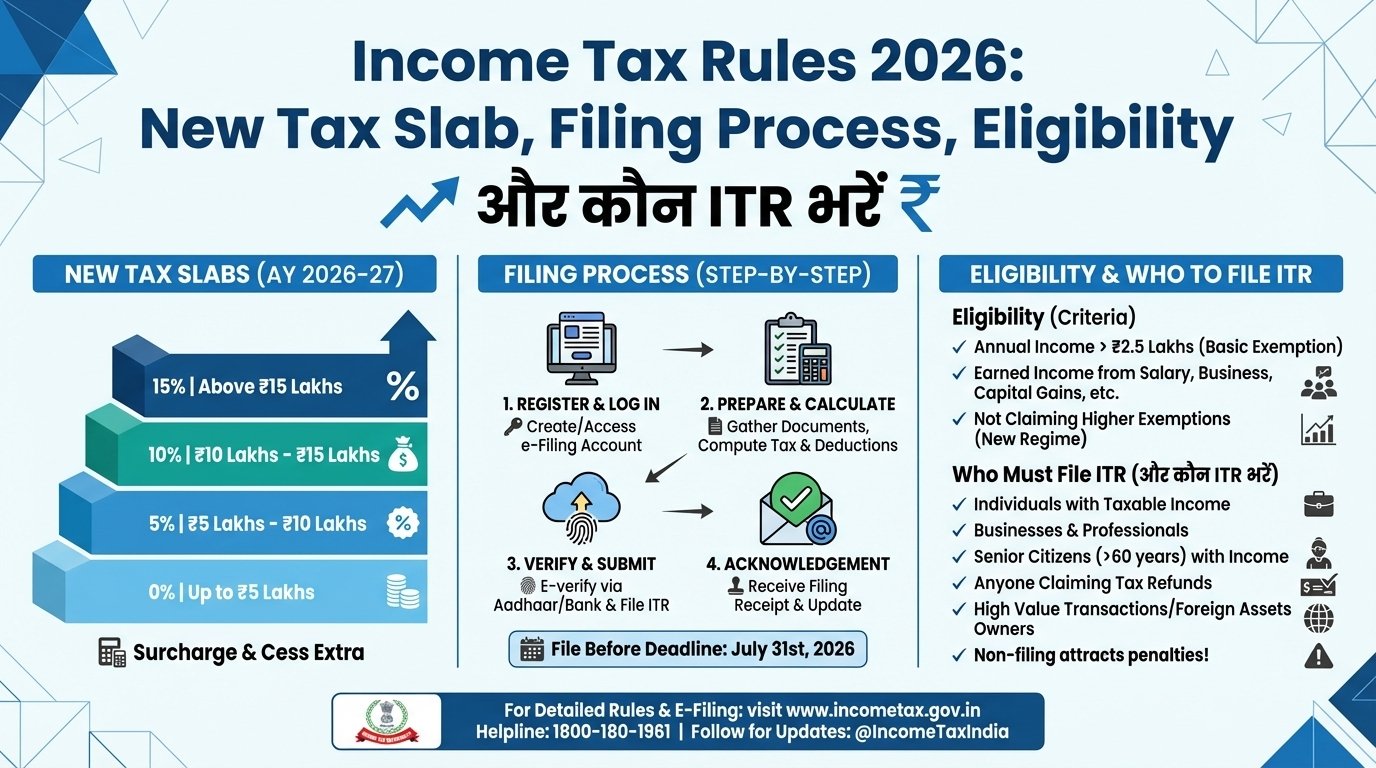
Income Tax Rules 2026 उन सभी लोगों के लिए बहुत important हैं जिनकी income salary, business, farming-related income, pension या other sources से आती है। अगर आप middle-class family से हैं, job करते हैं, self-employed हैं या pensioner हैं, तो ये rules सीधे आपकी जेब पर असर डालते हैं।
हर साल tax rules में कुछ न कुछ changes होते हैं, लेकिन 2026 में focus है simplification, digital compliance और tax burden clarity पर। यानी सरकार चाहती है कि tax system आसान हो और लोगों को बार-बार confusion न हो।
अगर आप सही समय पर rules समझ लेते हैं, तो आप extra tax, penalty और notice से बच सकते हैं और legally tax saving भी कर सकते हैं।
Read Also : Sahara India Refund New Notice 2026: Eligibility, Apply Process, Amount Status और Latest Update Explained
Latest Update / News Summary
Income Tax Rules 2026 के तहत new tax regime को default option की तरह promote किया जा रहा है, हालांकि old tax regime का option अभी भी available है। इसका मतलब यह है कि अगर आप कोई option select नहीं करते, तो आपका tax new regime के हिसाब से calculate होगा।
Latest updates में ITR filing process को और ज्यादा online और auto-filled बनाया गया है, जिससे salary class और pensioners को काफी राहत मिलेगी। AIS और Form 26AS के data का use बढ़ाया गया है।
इसके अलावा, high-value transactions पर monitoring और strict reporting rules भी लागू किए गए हैं, ताकि tax evasion को रोका जा सके।
Scheme का उद्देश्य – सरकार Income Tax Rules 2026 क्यों लाई
सरकार का main objective है tax system को transparent, simple और technology-driven बनाना। पहले tax rules इतने complicated थे कि normal taxpayer भी confuse हो जाता था।
Income Tax Rules 2026 का aim है कि honest taxpayers को परेशानी न हो और non-compliance करने वालों पर control रखा जाए। Digital tracking से government revenue improve होता है और system fair बनता है।
इसके साथ-साथ, voluntary compliance बढ़ाने के लिए government tax filing को less stressful बनाना चाहती है, ताकि ज्यादा लोग willingly ITR file करें।
Eligibility Criteria
Eligibility का मतलब यहाँ यह है कि किसे Income Tax Return (ITR) file करना जरूरी है। यह सिर्फ income limit पर depend नहीं करता, बल्कि कई conditions पर based होता है।
अगर आपकी total income basic exemption limit से ज्यादा है, तो आपको ITR file करना mandatory है। इसके अलावा, अगर आपने high-value transactions किए हैं, foreign assets हैं या TDS कट चुका है, तो भी ITR file करना जरूरी हो सकता है।
अगर आपकी income exemption limit से कम है और कोई special condition apply नहीं होती, तो ITR compulsory नहीं है। लेकिन फिर भी filing beneficial हो सकती है, जैसे loan approval या future record के लिए।
Required Documents
Income Tax filing से पहले documents ready रखना बहुत जरूरी है, क्योंकि गलत या incomplete information future में notice का कारण बन सकती है।
आपको salary slip, Form 16, Form 26AS, AIS, bank statements और investment proofs की जरूरत पड़ती है। Business या freelancing income वालों को profit-loss details और expense records भी रखने होते हैं।
इन documents का purpose यह verify करना होता है कि आपने income सही declare की है और tax calculation genuine है।
Application Process – ITR कैसे और कहाँ file करें (Step-by-Step Guide)
Income Tax Return filing process पूरी तरह online है और official income tax portal से किया जाता है। अगर आप पहली बार file कर रहे हैं, तो process को simple तरीके से follow करना जरूरी है।
Basic filing steps इस तरह होते हैं:
- Income Tax e-filing portal पर login/register करें
- Assessment Year 2026-27 select करें
- Applicable ITR form choose करें
- Income details, deductions और tax paid info fill करें
- Return submit करके e-verify करें
ध्यान रखें, बिना e-verification के आपका ITR valid नहीं माना जाएगा।
Important Dates – Income Tax 2026 की timeline
Income Tax filing में dates बहुत critical होती हैं, क्योंकि delay पर penalty और interest लग सकता है। Generally, non-audit cases के लिए ITR filing की last date 31 July 2026 के आसपास रहती है।
Audit cases और business taxpayers के लिए deadline अलग होती है। Revised return और belated return की dates भी अलग-अलग होती हैं।
आपको सलाह दी जाती है कि last date का इंतजार न करें, क्योंकि portal heavy traffic की वजह से slow हो सकता है।
Benefits / Tax Saving – फायदा क्या है
अगर आप Income Tax Rules 2026 को सही से follow करते हैं, तो आपको multiple benefits मिलते हैं। सबसे बड़ा benefit है legal tax saving और peace of mind।
ITR filing से loan approval, visa processing और government schemes में eligibility easy हो जाती है। Refund cases में timely filing से पैसा जल्दी मिल जाता है।
इसके अलावा, regular filling से आपकी financial credibility strong होती है, जो future planning में बहुत helpful होती है।
Common Mistakes – लोग कहाँ गलती करते हैं और कैसे बचें
सबसे common mistake है wrong income disclosure। कई लोग interest income या side income declare नहीं करते, जो later notice का कारण बनता है।
Another big mistake है wrong ITR form select करना या deductions गलत claim करना। Last moment filing में errors की possibility ज्यादा रहती है।
इन mistakes से बचने का best तरीका है documents पहले collect करना और AIS/26AS से data match करना।
FAQs
Q1. क्या new tax regime compulsory है?
नहीं, old tax regime का option अभी भी available है, लेकिन choice carefully करनी चाहिए।
Q2. Zero income पर ITR file करना जरूरी है?
Mandatory नहीं है, लेकिन record और future use के लिए beneficial हो सकता है।
Q3. Late ITR file करने पर क्या होगा?
Late fee और interest लग सकता है, और refund delay हो सकता है।
Q4. Farmers को ITR file करना जरूरी है?
अगर सिर्फ agricultural income है, तो tax नहीं लगता, लेकिन other income होने पर filing जरूरी हो सकती है।
Final Advice
Income Tax Rules 2026 को हल्के में न लें। अगर आप salaried, self-employed, pensioner या business owner हैं, तो अपनी income structure को समझना बहुत जरूरी है।
Documents पहले से ready रखें, सही tax regime choose करें और deadline से पहले ITR file करें। किसी भी WhatsApp forward या fake tax saving tips पर भरोसा न करें।
याद रखें, सही tax planning का मतलब ज्यादा tax देना नहीं, बल्कि सही तरीके से tax देना है। Awareness और timely action से आप penalty और stress दोनों से बच सकते हैं।